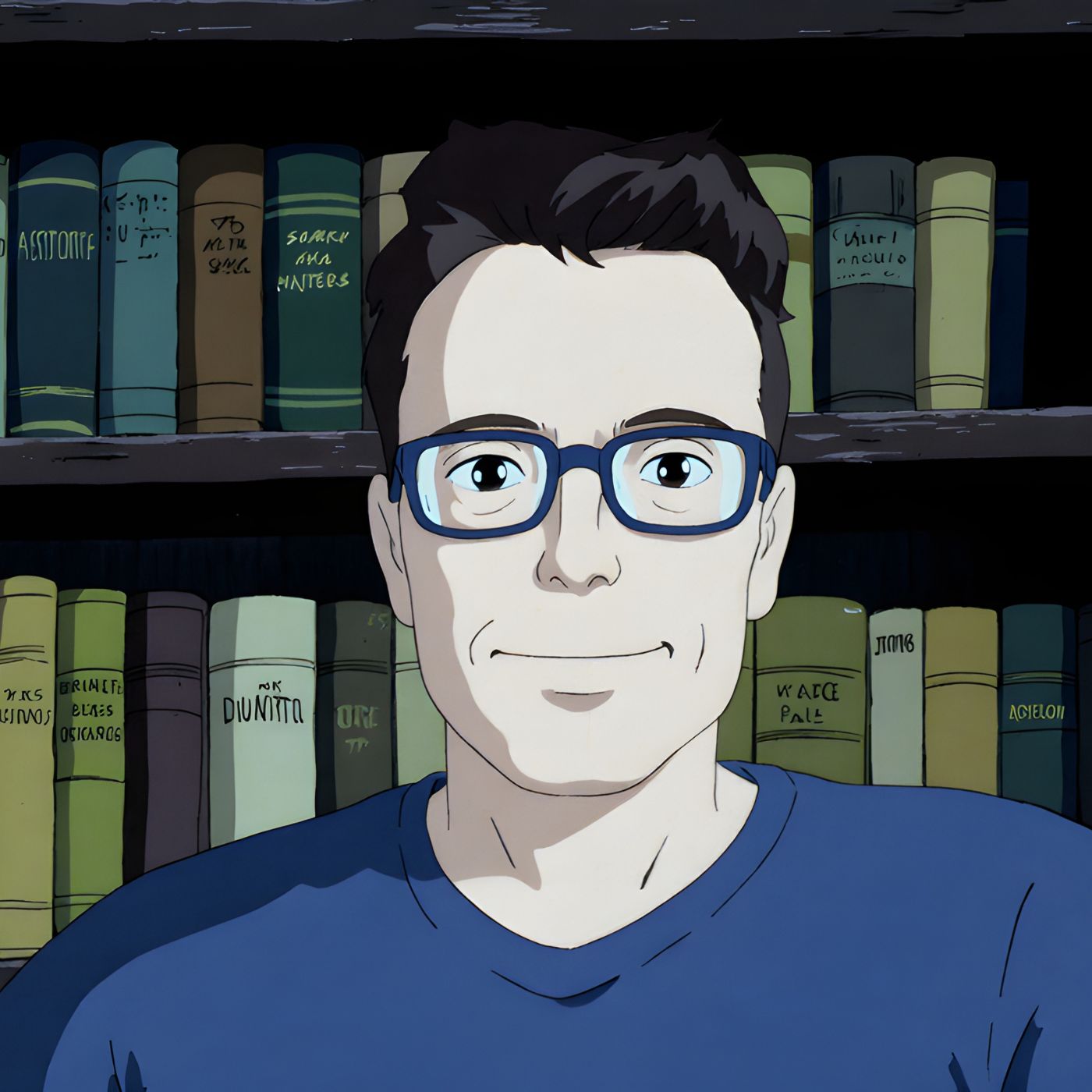
Alright, let’s talk about someone who absolutely blew my mind when I first encountered him – and I think he’s going to do the same for you. We’re diving into Lucretius, and here’s the thing: this guy was writing nearly 2,000 years ago, but he sounds like he could be your skeptical friend who stays up too late watching science documentaries and questioning everything.
Slide 1: Who Was This Revolutionary Thinker?
So look at this – Titus Lucretius Carus. We’re talking about a Roman poet living from roughly 99 to 55 BCE. And here’s what’s wild: we know almost NOTHING about his actual life. No contemporary accounts survived. No gossip columns, no Facebook profile, nothing. The man himself? A mystery. But his ideas? They survived, and they’re explosive.
What we DO have is his masterpiece – De Rerum Natura – “On the Nature of Things.” Picture this: nearly 7,400 lines of Latin poetry. Not a short essay. Not a pamphlet. An EPIC POEM explaining how the entire universe works.
Now, you might be thinking, “Wait – poetry? About physics and philosophy?” And that’s exactly what makes Lucretius so remarkable. He took the most radical scientific and philosophical ideas of his time and wrapped them in beautiful, memorable verse. Why? Because he wanted people to actually READ it. To REMEMBER it. To have these ideas stick in their minds like a great song you can’t shake.
He dedicated this work to Gaius Memmius – a Roman aristocrat, a patron. Lucretius was trying to reach the elite, the powerful, the people who could actually spread these ideas through Roman society. He wasn’t content to just have philosophers nodding along in some dusty corner. He wanted to change minds at the highest levels.
Slide 2: Rome Was Burning (Metaphorically… and Sometimes Literally)
Now, we need to understand WHEN Lucretius was writing, because context is everything here.
The late Roman Republic was… well, it was a disaster. We’re talking about civil wars tearing the state apart. Political assassinations becoming routine. The traditional values that had held Rome together for centuries? Crumbling. Generals were fighting each other for power. The Senate was paralyzed by corruption and infighting.
Imagine living in a world where everything your grandparents told you was stable and eternal is visibly falling apart. Where violence could erupt at any moment. Where the future feels completely uncertain.
And into THIS chaos, Lucretius offers something radical: ataraxia – freedom from mental disturbance. Peace of mind through understanding. He’s essentially saying, “Look, the world is terrifying right now. But what if I told you that most of what you’re afraid of – the angry gods, the punishment after death, the cosmic forces supposedly controlling your fate – what if I told you NONE of that is real?”
This is his quest for tranquility. Not through prayer or sacrifice or political power, but through KNOWLEDGE. Through understanding how nature actually works.
And here’s where it gets beautiful – he combines science and poetry. De Rerum Natura is simultaneously a rigorous scientific treatise explaining atoms, void, the nature of the soul, and a passionate, emotional call for mental liberation. He’s not just teaching you physics; he’s offering you a way to LIVE in a chaotic world.
Think about that for a second. While Rome is literally tearing itself apart, Lucretius is writing poetry about atoms. About natural law. About how understanding the physical universe can free you from fear and superstition. That takes either tremendous courage or tremendous faith in the power of ideas – probably both.
And you know what? He was right to have that faith. Because here we are, over 2,000 years later, still reading him. Still finding his ideas relevant. The Roman Republic fell. The Empire rose and fell. But Lucretius’ vision of a universe governed by natural law, not divine whim? That survived. That changed the world.
So as we move forward through his philosophy, I want you to keep this context in mind. This isn’t some abstract academic exercise. Lucretius was offering people a lifeline in genuinely dark times. He was saying, “You don’t have to be afraid. Let me show you why.”
And that’s exactly what we’re going to explore together.
We’ll dive into Epicureanism itself – the philosophical foundation Lucretius built upon. And trust me, everything you THINK you know about “Epicurean” is probably wrong…
Slide 3: What Epicureanism Actually Is
Alright, so before we go any further, I need to address the elephant in the room. When I say “Epicurean,” what pops into your head? Fancy restaurants? Gourmet food? Someone who’s really into expensive wine and artisanal cheese?
Yeah, that’s what I thought. And that’s EXACTLY the problem. We’ve completely butchered what this philosophy actually means. So let’s fix that right now.
Epicureanism was founded by Epicurus – a Greek philosopher who lived from 341 to 270 BCE. He set up shop in Athens at a place called “The Garden.” And already, that’s significant. Not “The Academy” like Plato. Not “The Lyceum” like Aristotle. The GARDEN. A place of cultivation, growth, peace.
Now here’s what made Epicurus radical – and I mean RADICAL for ancient Greece: he put pleasure at the center of the good life. The Greek word is hēdonē – which is where we get “hedonism.” And immediately, you can see why this got controversial.
But here’s the thing – and this is CRUCIAL – Epicurus completely redefined what pleasure means. He wasn’t talking about wild parties and sensory overload. He made a distinction that most people miss: there’s a difference between transient bodily pleasures and lasting intellectual pleasures.
True happiness, according to Epicurus, comes from two things: aponia – the absence of physical pain – and ataraxia – the absence of mental disturbance. Notice what’s happening here. He’s not saying “pursue maximum pleasure.” He’s saying “eliminate suffering and anxiety.” That’s a COMPLETELY different project.
Think about it this way: which would make you happier – eating an amazing meal when you’re already full, or eating a simple meal when you’re genuinely hungry? The Epicurean answer is obvious. The second one. Because the first is just excess, but the second actually satisfies a need and removes pain.
But the real genius of Epicureanism – and this is where Lucretius comes in – is its focus on freedom from fear. Look at the slide: “Freedom from Fear.” The philosophy sought to liberate people from two great terrors that dominated ancient life:
First: The fear of the gods’ intervention. The constant anxiety that you might anger some deity who would then ruin your life, your crops, your family.
Second: The fear of death and what comes after. The terror of eternal punishment, of judgment, of the unknown.
And Epicurus said: “What if I told you that understanding nature rationally – understanding how the world ACTUALLY works – dissolves these anxieties completely?”
That’s revolutionary. That’s not just philosophy; that’s psychological liberation.
Now, here’s where our guy Lucretius enters the picture. By the time he’s writing – we’re talking roughly 200 years after Epicurus – much of Epicurean teaching existed in scattered fragments, letters, and oral tradition. There was a real danger it could be lost.
De Rerum Natura is the fullest, most eloquent, most comprehensive exposition of Epicurean physics and ethics that survived from antiquity. Without Lucretius, we might have lost most of this philosophy entirely. He wasn’t just explaining Epicureanism – he was SAVING it.
And he did it with such passion, such poetic brilliance, that even people who disagreed with him couldn’t stop reading. That’s the power of great writing.
Slide 4: Atoms and Void – The Universe Explained
Okay, now we get to the really mind-blowing stuff. At the heart of Lucretius’ philosophy – and this comes straight from Epicurus – is a radical materialist cosmology. And when I say radical, I mean it challenged EVERYTHING people believed about how the universe worked.
The entire universe consists of exactly two things: atoms – tiny, indivisible particles – and void – empty space. That’s it. Everything you see, everything you touch, everything you ARE – it’s just atoms moving through void.
1. Eternal Atoms
These atoms are eternal. They can’t be created, they can’t be destroyed. They’re infinite in number, and they vary in shape and size. Different combinations of these atoms produce all the matter we observe in nature.
Think about that for a second. In the first century BCE, without microscopes, without particle accelerators, without any of our modern technology, Lucretius is describing something remarkably close to what we now know about matter. That’s not just lucky guessing – that’s brilliant philosophical reasoning.
2. The Void
Now, the void – empty space – is absolutely essential to this system. And here’s why: without void, atoms couldn’t move. They’d be locked in place. There’d be no motion, no collision, no combination. The void isn’t just “nothing” – it’s the necessary condition for everything to happen.
Ancient philosophers HATED this idea. Aristotle famously said “nature abhors a vacuum.” The idea of genuine emptiness disturbed people. But Lucretius insisted: void is real, and it’s necessary.
3. The Atomic Swerve – And Here’s Where It Gets Weird
Okay, this is my favorite part. Lucretius introduced something called the clinamen – the atomic swerve.
Picture atoms falling through infinite void. In a purely deterministic system, they’d just fall in parallel lines forever, never interacting. But Lucretius says: at random moments, atoms swerve slightly from their path. Just a tiny, unpredictable deviation.
Why does this matter? Because it breaks the deterministic chain! It introduces genuine randomness into the universe. And that randomness – that unpredictability – creates the possibility of free will.
Think about the implications: if everything were purely deterministic, if every event were just the inevitable result of prior causes going back to infinity, then you’d have no real choices. You’d be a puppet of cosmic forces. But the swerve? The swerve means the universe isn’t a machine grinding along predetermined tracks. There’s genuine novelty. Genuine freedom.
Now, modern physics would quibble with the details – quantum mechanics works differently than Lucretius imagined. But the basic insight? That there’s fundamental indeterminacy in nature? He was onto something profound.
4. No Divine Design
And here’s the kicker – the conclusion that made Lucretius dangerous, that got Epicureanism labeled as atheistic and immoral:
The universe operates by natural laws, not divine purpose.
There is no teleology – no cosmic plan, no designer guiding the motion of atoms. Nature is self-sufficient. It doesn’t need gods to explain it. It doesn’t need divine intervention to keep it running.
Do you understand how radical this is? In a world where EVERYONE – and I mean everyone – assumed the gods were constantly meddling in human affairs, where every thunderstorm was Zeus’s anger and every plague was divine punishment, Lucretius is saying: “No. It’s just atoms. It’s just nature following its own laws.”
That’s not atheism, exactly – Lucretius believed gods existed. But they’re off in their own realm, perfectly happy, completely unconcerned with human affairs. They neither punish nor reward. They don’t care about your prayers or your sacrifices.
Which means – and this is the liberating part – you don’t have to live in fear of them.
So there you have it: atoms and void. Eternal matter moving through infinite space, occasionally swerving, combining and recombining to create everything we see. No divine plan. No cosmic purpose. Just nature, doing what nature does.
And Lucretius looked at this vision of the universe and thought: “This is GOOD news. This is liberating. This means we can stop being afraid and start actually living.”
Next, we’re going to see how he applies this atomic theory to the question that terrifies humans more than anything else: What happens when we die?
And trust me, his answer is going to challenge everything you’ve been taught to believe about mortality.
Slide 5: Death and the Soul – The Argument That Changed Everything
Alright, we’ve established the physics – atoms and void, a universe operating by natural law. Now we get to the part where Lucretius takes those abstract ideas and applies them to the questions that actually keep people up at night.
What happens when I die? Are the gods watching me? Will I be punished for my mistakes?
And Lucretius’ answer to all of this is going to be… well, let’s just say it’s not what most people wanted to hear.
Lucretius devoted enormous attention to dispelling the fear of death. And he believed – genuinely believed – that this fear was the root of almost all human suffering. Think about it: how much of your anxiety, your bad decisions, your desperate grasping for pleasure or power or immortality… how much of that comes from the terror of your own mortality?
Here’s his most famous argument, and it’s devastatingly simple:
“When we exist, death is not yet present; when death is present, we do not exist.”
Read that again. When YOU exist – right now, conscious, thinking, feeling – death isn’t here. And when death arrives? You won’t be there to experience it. Death and you never actually meet.
But Lucretius doesn’t just give us clever wordplay. He backs this up with his atomic theory. Remember: everything is atoms. And that includes the soul.
The soul, according to Lucretius, is material. It’s composed of particularly fine, subtle atoms dispersed throughout your body. It’s what gives you sensation, consciousness, the ability to think and feel. But – and here’s the crucial part – it’s still PHYSICAL. It’s still made of atoms.
So what happens when you die? Those soul-atoms scatter. They disperse back into the universe. And when they scatter, sensation ceases entirely. There’s no “you” left to experience anything. No consciousness floating around. No ghost watching your own funeral. No afterlife tribunal judging your deeds.
Death is simply the absence of experience.
And therefore – and this is the liberating conclusion – death is nothing to fear.
You can’t suffer when you’re dead because there’s no “you” to suffer. You can’t be punished because there’s no “you” to punish. You can’t regret or mourn or feel pain because sensation itself has ended.
Now, I know what some of you are thinking: “But Professor Leshley, isn’t that terrifying? The idea of just… ceasing to exist?”
And Lucretius would say: “Was it terrifying before you were born? Were you anxious about all the centuries that passed before you existed? No? Then why fear the centuries after?”
It’s the same state. Non-existence. And you’ve already “experienced” it – or rather, NOT experienced it – for all of eternity before you were born. Death is just returning to that state.
But here’s where Lucretius gets really practical. He’s not just giving us abstract comfort. He’s telling us how to LIVE.
By accepting mortality – really, truly accepting that this life is all we have – we can focus on living WELL in the here and now. We can:
– Cultivate genuine friendships based on mutual pleasure and support
– Pursue knowledge for its own sake, not for some cosmic reward
– Enjoy simple pleasures without guilt or anxiety
– Avoid excess and the suffering it brings
– Achieve that state of ataraxia – peace of mind
Because here’s the thing: if you believe in an afterlife with rewards and punishments, you’re always performing. You’re always anxious about whether you’re good enough, whether you’ve followed the right rules, whether the gods are pleased with you.
But if you accept Lucretius’ view? You’re free. Free to live according to nature and reason. Free to pursue genuine happiness rather than cosmic approval.
That’s not nihilism. That’s liberation.
Slide 6: Religion and Superstition – The Diagnosis
Now we come to what made Lucretius truly dangerous in the ancient world – and frankly, in many periods since. His critique of religion.
Lucretius offers a naturalistic explanation for why religion exists in the first place. And it’s not flattering.
Religion arises, Lucretius argues, when humans lack scientific understanding. When you don’t know what causes thunder, you invent Thor or Zeus. When you don’t understand earthquakes, you imagine angry gods beneath the earth. When disease strikes, it must be divine punishment.
It’s a coping mechanism for ignorance. And in some ways, you can’t blame ancient people for this. They were trying to make sense of a terrifying, unpredictable world with limited tools.
But – and here’s Lucretius’ point – we don’t HAVE to stay in that state of ignorance. We can investigate. We can understand natural causes. We can replace supernatural explanations with natural ones.
Now, here’s something subtle that people often miss: Lucretius didn’t deny the existence of gods. He wasn’t an atheist in the modern sense.
He believed gods exist. But – and this is crucial – they dwell in remote, serene realms called the “intermundia” – the spaces between worlds. And they are utterly, completely, totally indifferent to human affairs.
Think about it from the Epicurean perspective: if the gods are perfectly happy, perfectly at peace, why would they bother with us? Why would they care about your prayers or sacrifices? Why would they get angry about human behavior? Anger disturbs peace of mind. Intervention requires effort and concern.
The gods, in their perfect ataraxia, simply don’t care. They neither punish nor reward. They’re not watching you. They’re not judging you. They’re just… existing in blissful tranquility.
Which, if you think about it, is what we should aspire to as well.
But here’s where Lucretius gets angry – and you can feel it in his poetry. Religious fear and superstition don’t just arise from ignorance. They actively HARM people. They breed:
– Anxiety about divine punishment
– Irrational behavior trying to appease imaginary forces
– Cruelty justified by religious duty
Lucretius gives us one of the most powerful examples in all of ancient literature: the sacrifice of Iphigenia. You know this story? Agamemnon, the Greek commander, is told by priests that the gods demand he sacrifice his own daughter so the winds will blow and the fleet can sail to Troy.
And he does it. He kills his own child because religion told him to.
Lucretius uses this as his example of religion’s destructive power. He writes one of the most famous lines in Latin literature:
“Tantum religio potuit suadere malorum”
“So great are the evils that religion could prompt.”
That’s not just criticism. That’s condemnation. Religion – not the gods themselves, but human religious practice – causes people to commit atrocities they would never otherwise consider.
But Lucretius isn’t just tearing down. He’s offering something better.
By providing rational, naturalistic explanations for phenomena once ascribed to divine will, he’s offering humanity a path to freedom. Freedom from:
– The tyranny of religious dread
– The manipulation of priests and prophets
– The anxiety of trying to please capricious deities
– The guilt and shame imposed by supernatural moral systems
Thunder isn’t Zeus’s anger – it’s atmospheric phenomena we can study and understand. Disease isn’t divine punishment – it’s natural processes we can investigate and potentially cure. Earthquakes aren’t the gods’ wrath – they’re geological events following natural laws.
And once you understand this – once you REALLY internalize that nature operates by consistent, discoverable laws – you’re free.
Free to investigate. Free to learn. Free to live without supernatural terror hanging over your head.
Now, I want to be clear about something. Lucretius isn’t saying “religion is always bad” or “religious people are stupid.” He’s making a more specific argument: that supernatural explanations keep us in a state of fear and ignorance, and that we can do better.
We can replace fear with understanding. We can replace superstition with science. We can replace anxiety about divine judgment with rational ethics based on human flourishing.
And you know what’s remarkable? This argument – written over 2,000 years ago – is still relevant. We’re STILL having debates about supernatural versus natural explanations. We’re STILL dealing with religious fear and manipulation. We’re STILL trying to figure out how to live good lives without needing cosmic approval.
Lucretius saw all of this coming. And he offered a solution: knowledge. Understanding. Reason.
Not as a weapon against religion, but as a path to genuine peace of mind.
And that’s what we’re going to explore next – how all of this comes together in the structure and style of his magnificent poem.
We’ll look at how Lucretius actually WROTE this revolutionary philosophy – the structure, the poetry, the rhetorical brilliance that made these dangerous ideas irresistible to readers across two millennia.
Slide 7: The Poem’s Structure and Style – Architecture of Persuasion
Alright, so we’ve covered WHAT Lucretius believed – the atoms, the void, the mortality of the soul, the critique of religion. Now we get to something equally important: HOW he communicated these ideas.
Because here’s the thing – and this is something I want you to really think about – brilliant ideas die all the time. They get forgotten, lost, dismissed. But Lucretius’ ideas survived for over two thousand years, through the fall of Rome, through the Middle Ages when his philosophy was considered heretical, through periods when his book was literally being burned.
Why? Because he was a genius not just of philosophy, but of COMMUNICATION.
De Rerum Natura is organized into six books. Not chapters – BOOKS. And each one builds on the previous, creating this magnificent intellectual architecture.
Book One: The fundamental principles of matter – atoms and void, the basic building blocks of everything.
Book Two: The nature of atomic motion, including that crucial concept of the swerve, and how atoms combine to create the world we see.
Book Three: The nature of the soul – proving it’s material, proving it’s mortal, dismantling the fear of death.
Book Four: Sensation and thought – how do we perceive the world? How does knowledge work? This is Lucretius doing epistemology and psychology.
Book Five: Cosmology and natural phenomena – the origin of the world, astronomical events, weather, all explained through natural causes rather than divine intervention.
Book Six: Human history, society, diseases, and mortality – bringing everything back to the human experience, showing how this philosophy applies to actual life.
Notice the progression here. He starts with the most fundamental, abstract concepts – atoms you can’t see, void you can’t touch – and gradually works his way to the most immediate, concrete concerns: Why do we get sick? Why do we die? How should we live?
He’s not just dumping information on you. He’s taking you on a JOURNEY, from the cosmic to the personal, from the invisible to the visible, from theory to practice.
That’s pedagogical genius.
Now, here’s what’s remarkable about Lucretius as a scientific thinker. He’s meticulous. He doesn’t just assert things – he argues for them, provides evidence, considers objections.
He explains atomic theory with careful logical arguments. He tackles optics – how vision works, why mirrors reflect, why things look smaller at a distance. He discusses meteorology – thunder, lightning, rain, clouds. He explores biology – reproduction, heredity, the development of life on earth.
And he does all of this without modern instruments, without laboratories, without the scientific method as we know it. Just observation, reason, and brilliant philosophical inference.
Sometimes he’s wrong, of course. He didn’t have our knowledge of genetics or quantum mechanics or atmospheric chemistry. But the METHOD – the commitment to natural explanations, the refusal to invoke supernatural causes, the insistence on evidence and logic – that’s sound. That’s the foundation of scientific thinking.
But here’s where Lucretius transcends being just a philosopher or just a scientist. He’s a POET. And not just any poet – one of the greatest Latin poets who ever lived.
Despite dealing with atoms and void and the mechanics of sensation, De Rerum Natura is filled with:
Vivid imagery: He describes atoms like dust motes dancing in a sunbeam. He compares the soul to perfume dispersing in air. He makes the invisible visible through metaphor.
Emotional intensity: When he talks about the fear of death, you FEEL the anxiety he’s trying to dispel. When he condemns the sacrifice of Iphigenia, you feel his moral outrage.
Rhetorical power: He uses repetition, rhythm, sound patterns – all the tools of great oratory – to make his arguments not just logical but MEMORABLE.
And this is crucial: Lucretius understood something that many philosophers miss. Truth isn’t enough. You can have the most brilliant, accurate, important ideas in the world, but if you can’t communicate them in a way that moves people, that sticks in their memory, that makes them WANT to engage…
Those ideas die.
Lucretius made his philosophy beautiful because beauty is PERSUASIVE. Beauty makes ideas last.
And it worked. Virgil, Rome’s greatest poet, studied Lucretius intensely – you can see the influence throughout the Aeneid. Horace admired him. Even writers who disagreed with his philosophy couldn’t help but be influenced by his artistry.
That’s the power of combining rigorous thought with magnificent expression.
Slide 8: Legacy and Influence – The Ideas That Wouldn’t Die
Okay, so here’s where the story gets really interesting. Because for centuries, Lucretius almost disappeared.
As Christianity became dominant in Europe, Epicurean philosophy was… let’s say “not popular.” The idea that the soul is mortal? That there’s no divine judgment? That pleasure is good and fear of death is irrational?
Yeah, that didn’t play well with Christian theology.
Manuscripts of De Rerum Natura became rare. The poem was copied less and less. It was heading toward extinction.
And then, in 1417, something extraordinary happened.
A man named Poggio Bracciolini – a humanist scholar, a manuscript hunter – was poking around in a German monastery. And in some forgotten corner, covered in dust, he found a manuscript of De Rerum Natura.
One manuscript. That’s all that survived. If Poggio hadn’t found it, if that monastery had burned down, if the monks had decided to scrape off the text and reuse the parchment… we would have lost Lucretius forever.
But he found it. And he recognized what he had. And he copied it. And those copies spread across Renaissance Europe like wildfire.
And suddenly, European intellectuals were reading about atomism, about natural law, about a universe that doesn’t need God to explain it. This was DANGEROUS stuff. Revolutionary stuff.
Pierre Gassendi, a French philosopher-priest, tried to reconcile Epicurean atomism with Christianity. He couldn’t quite pull it off, but he kept the ideas alive, made them respectable enough to discuss.
And those ideas fed into early modern science. They challenged medieval scholasticism. They helped create the intellectual space for the Scientific Revolution.
By the Enlightenment, Lucretius was a hero to the philosophers. Voltaire loved him – here was ancient precedent for attacking religious superstition! Diderot praised him. The French philosophes saw him as a kindred spirit, someone who’d fought the same battles against ignorance and dogma.
They conveniently overlooked the parts where Lucretius said we should live quietly and avoid politics. The Enlightenment thinkers were much more activist. But they claimed him as an ancestor anyway.
And then – THIS is what blows my mind – Lucretius influenced some of the most important thinkers of the modern era.
Charles Darwin: Read Lucretius. Was fascinated by his ideas about the development of life, about species arising through natural processes rather than divine creation. Lucretius didn’t have evolution by natural selection, but he had the basic insight that life develops according to natural law.
Karl Marx: His doctoral dissertation was partly about ancient atomism. He saw in Lucretius a materialist philosopher who understood that ideas emerge from material conditions, not the other way around.
Percy Shelley: The Romantic poet, translated parts of De Rerum Natura, was inspired by its vision of a godless universe where humans create their own meaning.
Think about that range: evolutionary biology, political philosophy, Romantic poetry. Lucretius touched ALL of it.
And you know what? He’s still relevant today.
His views on mortality are being rediscovered by secular ethicists and people in the “death positive” movement who are trying to have honest conversations about dying.
His critique of religious fear speaks to ongoing debates about the role of religion in public life, about teaching science in schools, about how we understand the natural world.
His emphasis on simple pleasures and mental tranquility resonates with mindfulness movements, with people trying to find peace in our anxious, overstimulated modern world.
His atomism – okay, we’ve refined it significantly with quantum mechanics and particle physics, but the basic insight that matter is made of tiny particles following natural laws? He was RIGHT about that.
And perhaps most importantly, his fundamental message – that understanding nature through reason can liberate us from fear and help us live better lives – that’s as relevant now as it was in 50 BCE.
We’re still afraid of death. We’re still manipulated by fear. We’re still struggling to find peace of mind in chaotic times. We’re still trying to figure out how to live well in a universe that doesn’t care about us.
Lucretius offers answers. Not the ONLY answers, maybe not even the RIGHT answers for everyone. But answers worth considering.
And the fact that a Roman poet from 2,000 years ago can still speak to our deepest concerns? That tells you something about the power of great ideas, beautifully expressed.
So here’s what I want you to take away from this: Lucretius wasn’t just preserving Epicurean philosophy. He was creating something that would survive empires, outlast religions, inspire revolutions, and continue challenging people to think differently about life, death, and everything in between.
One manuscript, found in a dusty monastery, changed the world.
That’s the power of ideas. That’s the importance of preserving knowledge. That’s why we study philosophy.
Because you never know when an ancient text might contain exactly the insight someone needs, centuries later, to see the world in a completely new way.
Slide 9: Conclusion – Lucretius’ Enduring Message
Alright, we’ve journeyed through atoms and void, through death and religion, through poetry and history. Now we come to the heart of it all – what does Lucretius actually want us to DO with all this knowledge?
Because philosophy isn’t just about understanding the world. It’s about living in it. And Lucretius has very specific ideas about how understanding nature should change the way we live.
Look at these three pillars of Lucretius’ message. Each one builds on what we’ve learned, but each one is also a call to action. Let’s take them one at a time.
1. Understand Nature Through Reason
“Lucretius calls us to replace fear and superstition with rational inquiry. Knowledge of nature’s workings liberates the mind and dispels anxiety.”
Think about what he’s really saying here. He’s not just saying “be smart” or “learn stuff.” He’s making a much deeper claim: that IGNORANCE is the root of human suffering.
When you don’t understand why thunder happens, you invent angry sky gods. And then you live in fear of those gods. And then you waste your life trying to appease them – sacrificing animals, following arbitrary rules, living in constant anxiety about whether you’ve done enough.
But when you understand that thunder is a natural phenomenon – atmospheric electricity, pressure changes, completely explicable through natural law – that fear EVAPORATES.
You’re not replacing one belief with another. You’re replacing fear with understanding. Anxiety with knowledge. Superstition with reason.
And here’s what I love about this: Lucretius isn’t being elitist about it. He’s not saying “only philosophers can understand nature.” He wrote his poem in Latin – the language of Rome – not Greek, the language of elite philosophy. He used vivid metaphors and beautiful poetry to make complex ideas accessible.
He believed EVERYONE could benefit from understanding nature. That liberation through knowledge wasn’t just for the educated elite – it was for anyone willing to think, to question, to observe.
That’s radical democracy of the mind. That’s saying: “You don’t need priests to interpret reality for you. You don’t need authorities to tell you what to think. Use your own reason. Observe the world. Draw your own conclusions.”
And you know what? That idea – that ordinary people can understand nature through reason – that’s the foundation of the scientific revolution, of the Enlightenment, of modern democracy itself.
Lucretius planted that seed 2,000 years ago.
2. Embrace the Material World
“Accept that the universe is physical, governed by natural law, not divine caprice. This acceptance frees us to focus on living well in the here and now.”
This is harder than it sounds. Really sit with this for a moment.
Lucretius is asking us to accept that there’s no cosmic plan. No divine purpose. No grand narrative where everything happens for a reason. The universe isn’t a story with you as the protagonist. It’s atoms moving through void according to natural law.
For a lot of people, that sounds depressing. Nihilistic even. If there’s no cosmic meaning, no divine purpose, then what’s the point?
But Lucretius flips this completely. He says: “This is LIBERATING!”
If the universe doesn’t have a plan for you, then YOU get to make your own plan. If there’s no cosmic judge evaluating your every action, then you’re free to figure out what actually matters, what actually contributes to human flourishing.
You’re not performing for the gods. You’re not trying to earn cosmic brownie points. You’re not living according to some arbitrary divine rulebook.
You’re free to ask: What actually makes me happy? What actually reduces suffering? What kind of life do I actually want to live?
And here’s the beautiful part – when you accept the material world, when you stop looking for supernatural explanations and supernatural solutions, you start paying attention to THIS world. The one you actually live in.
You notice the pleasure of friendship. The satisfaction of understanding something new. The simple joy of a good meal when you’re hungry, or rest when you’re tired. The beauty of nature – not as God’s creation, but as the magnificent, self-organizing complexity of matter following natural law.
You focus on the here and now because the here and now is all there is. And paradoxically, that makes it MORE precious, not less.
3. Accept Mortality and Seek Tranquility
“Death is nothing to fear – it is simply non-existence. By embracing our finite nature, we can cultivate friendships, pursue simple pleasures, and achieve lasting peace of mind.”
This is the culmination of everything Lucretius has been building toward. This is where the physics becomes ethics. Where understanding atoms leads to living well.
Death is nothing to fear because when death arrives, you won’t be there to experience it. The atoms that make up your soul will scatter. Sensation will cease. There will be no “you” to suffer, to regret, to fear.
And if you REALLY accept this – not just intellectually, but deep in your bones – it changes everything.
You stop postponing happiness until some imaginary future. You stop living for an afterlife that doesn’t exist. You stop trying to achieve some kind of cosmic significance or eternal fame.
Instead, you focus on what actually matters:
Friendships – because the people you love are mortal too, and your time with them is limited and therefore precious.
Simple pleasures – because you don’t need to impress the gods or earn salvation. A beautiful sunset, a good conversation, a moment of genuine laughter – these are ENOUGH. They don’t need to be justified by some higher purpose.
Peace of mind – that state of ataraxia we keep coming back to. Freedom from anxiety, from fear, from the constant mental disturbance that comes from worrying about things you can’t control.
And you know what’s remarkable? This isn’t resignation. This isn’t giving up. This is actually the most life-affirming philosophy imaginable.
Because when you accept that this life is all you have, you take it SERIOUSLY. You don’t waste it on fear or superstition or trying to please imaginary cosmic judges. You live it. Fully. Consciously. Gratefully.
Slide 10: The Final Word – Virgil’s Tribute
Look at this quote. This is from Virgil – Rome’s greatest poet, writing a generation after Lucretius died:
“Happy is he who has been able to know the causes of things.”
Felix qui potuit rerum cognoscere causas.
Virgil is reflecting on Lucretius’ legacy here. And he’s captured something essential. Not just “happy is he who knows things” but “happy is he who has been able to know the CAUSES of things.”
Understanding WHY. Understanding HOW. Penetrating beneath appearances to grasp the underlying reality.
That’s what makes someone happy. That’s what brings ataraxia. Not wealth, not power, not fame, not even pleasure in the conventional sense.
Knowledge. Understanding. The ability to see through fear and superstition to the natural causes beneath.
And here’s what I want you to understand: Lucretius wasn’t just preserving Epicurean philosophy. He was creating something that would survive empires, outlast religions, inspire revolutions, and continue challenging people – people like you, right now – to think differently about life, death, and everything in between.
So let’s bring this home. What does a Roman poet from 2,000 years ago have to say to us in the 21st century?
First: We’re still afraid of death. We still avoid thinking about it, talking about it, preparing for it. We medicalize it, sanitize it, hide it away. And that fear still drives so much anxiety, so much desperate grasping for immortality through fame or legacy or cryogenic preservation.
Lucretius says: “Stop. Death is nothing. Accept your mortality and LIVE.”
Second: We’re still manipulated by fear – not always religious fear anymore, but fear nonetheless. Fear of missing out. Fear of not being successful enough. Fear of judgment from others. Fear of not mattering in the grand scheme of things.
Lucretius says: “There IS no grand scheme. The universe doesn’t care about you. And that’s GOOD NEWS because it means you’re free to figure out what actually matters to YOU.”
Third: We’re still struggling to find peace of mind in chaotic times. Our world is arguably more chaotic than Lucretius’ Rome – more information, more stimulation, more anxiety, more existential threats.
And Lucretius offers the same solution he offered 2,000 years ago: Understand nature. Embrace the material world. Accept mortality. Cultivate simple pleasures. Seek tranquility.
But here’s the final lesson I want you to take from Lucretius – and this is about more than just his philosophy. It’s about the POWER of ideas when they’re expressed beautifully.
One manuscript. Found in a dusty monastery in 1417. That’s all that survived of De Rerum Natura.
One manuscript changed the world.
It inspired the Renaissance. It fed into the Scientific Revolution. It influenced Darwin, Marx, and Shelley. It continues to challenge religious dogma and inspire secular ethics today.
Why? Because Lucretius didn’t just have good ideas. He expressed them in a way that was MEMORABLE. BEAUTIFUL. POWERFUL.
He understood that truth needs beauty to survive. That philosophy needs poetry. That if you want ideas to last, to really change people’s minds and hearts, you can’t just present logical arguments.
You have to move people. You have to make them FEEL the truth of what you’re saying. You have to create something so beautiful that even people who disagree with you can’t help but engage with it.
So here’s what I want you to do with Lucretius. Don’t just learn about him. Don’t just memorize his arguments for the exam.
Actually ENGAGE with his ideas. Ask yourself:
– What would change in my life if I really accepted that death is nothing to fear?
– How much of my anxiety comes from supernatural fears or cosmic concerns that might not be real?
– What would it mean to focus on simple pleasures and genuine friendships rather than chasing after things that don’t actually make me happy?
– Can I find peace of mind through understanding rather than through belief?
You don’t have to agree with Lucretius. You don’t have to become an Epicurean. But you should at least take his challenge seriously.
Because 2,000 years later, his questions are still our questions. His fears were our fears. His search for tranquility is our search.
And if a Roman poet, writing in the chaos of a collapsing republic, could find a path to peace of mind through understanding nature…
Maybe we can too.
“Happy is he who has been able to know the causes of things.”
That’s Lucretius’ gift to us. Not just knowledge, but the happiness that comes from understanding. Not just philosophy, but a way to live.
And that, my friends, is why we study ancient philosophy. Not because it’s old, but because it’s ALIVE. Because these ideas still matter. Because Lucretius still has something to teach us about how to live well in a universe that doesn’t care whether we exist or not.
Which, when you think about it, is the most liberating truth of all.
Oh, and one more thing. If you take nothing else from Lucretius, take this: atoms and void. That’s it. That’s the universe. Everything else – all the beauty, all the meaning, all the love and friendship and knowledge and art – emerges from atoms moving through void according to natural law.
Isn’t that remarkable? Isn’t that MORE wonderful than any divine creation story? That all of this complexity, all of this beauty, all of YOU… arose naturally, without plan or purpose, just matter organizing itself in increasingly complex ways?
Lucretius looked at that and saw not meaninglessness, but liberation. Not despair, but hope. Not emptiness, but infinite possibility.
Maybe he was onto something.
Thank you